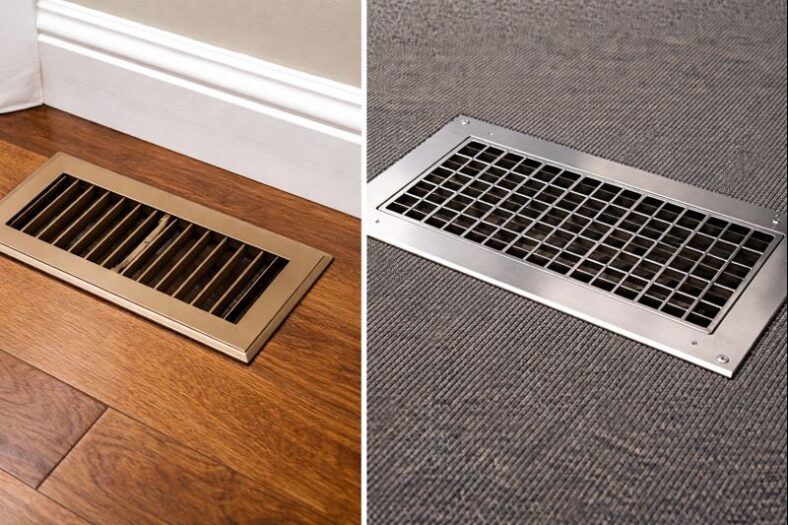
In a typical walk-through in either a home or a large commercial building, not many people would notice the floor vents beneath their feet, and would think even less about them. But have you ever wondered why they look or function so differently in each place? Well, you are about to find out. Today, we will spell out the main differences between residential and commercial floor vents, plus why selecting the right one really counts.
Whether you are upgrading wood floor vents at home or planning for very heavy business foot traffic, this guide will allow you to make smarter choices. Are you ready to be charmed by the world of air flow? Let’s get started.
1. Design and Aesthetic Needs
In residential floor vents, the aesthetic becomes a primary consideration. Homeowners would much prefer to find vents that integrate harmoniously into the floors where they are installed, particularly when installing floor vents for use alongside hardwood or premium luxury vinyl planks. The ultimate aim is to achieve comfort and visual appeal.
Commercial vents, on the other hand, pay little attention to aesthetics but focus on durability and efficiency. They are mostly metal-made and a little more rugged to withstand heavier foot traffic, rolling equipment, or an industrial environment.
If you’re choosing vents for a home, the question really is: blend in or stand out? For businesses, the bigger issue is: can they hold up to the everyday wear and tear?
2. Airflow Capacity and Performance
Residential vents are appropriately sized to accommodate the higher standard airflow necessary to meet the comfort requirements of residential buildings. Commercial spaces require much larger and powerful systems because they occupy larger areas and must carry out temperature regulation for many people at once.
Thus, commercial floor vents are wider, stronger, and made to withstand higher air pressure. Residential vents, including stylish wood floor vents, put greater emphasis on smooth and quiet air handling than overpowering the room.
3. Materials and Build Quality
Wood, plastic, or lightweight metal is used to make residential vents. With a wooden floor vent, most homeowners feel that it is beautifully elegant and blends in perfectly with the rest of the natural flooring.
Heavy-duty steel or aluminum is used for commercial vents so that they would withstand impacts and corrosion for years of usage without damage. Since they are not decorative, they tend to last a lot longer than their counterparts in more usual environments.
4. Installation Differences
In homes, the installation of vents is usually a simple practice since cutouts are the same, while replacing vents rarely needs professional assistance. Commercial sites, however, mandate that installations adhere to strict codes, airflow calculations, and safety requirements. Consequently, a lot of hired help may be needed to ensure compliance.
5. Maintenance Requirements
The residential flow of venting simply requires basic cleaning to rid itself of dust and debris. On the other hand, a commercial vent gets dirtier since foot traffic brings grime to vent openings, in addition to environmental contaminants. Thus, maintenance is performed more frequently and is, at times, complicated, necessitating the use of commercial-quality ventilation tools.
All in All
In both types of vents, the aim is to assist the air conditioning system in moving air. However, they were designed quite differently from each other. Residential vents focus on comfort and aesthetics, thus making wood floor vents preferable; commercial vents provide strength, safety, and performance. Understanding these differences will help you to make the right choice for your house or business and make sure that your airflow works efficiently in the process.